


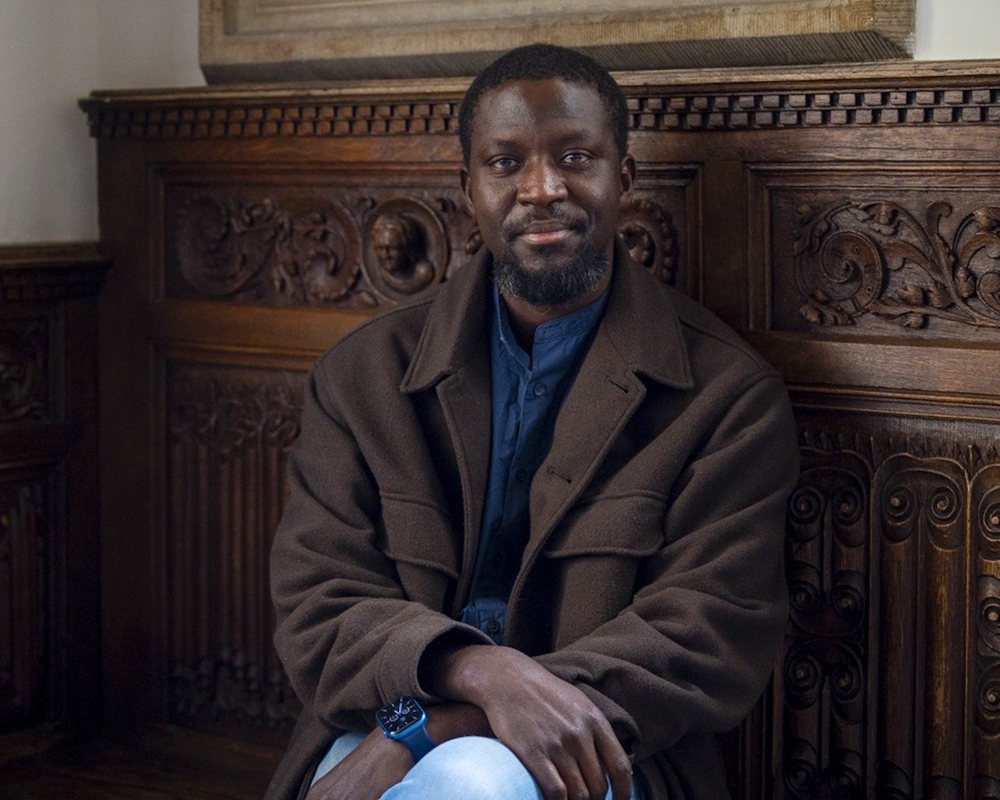

Ibrahim Mahama’s Historic Rise: Why It Matters
On 4 December 2025, the global contemporary-art world witnessed a milestone: Ghanaian artist Ibrahim Mahama became the first African ever to claim the number one spot on the annual ArtReview Power 100 list.
This is more than a personal triumph. It signals a broader shift in the center of gravity in global art. For decades, Africa—and its vibrant, diverse artistic communities—have been underrepresented in global rankings and art-world influence. Mahama’s ascent shatters that barrier, and places Ghana firmly on the map of contemporary global art discourse.
As ArtReview’s editor-in-chief, Mark Rappolt, highlighted, Mahama’s top ranking reflects structural changes: the world is increasingly recognizing artists whose influence combines aesthetic vision with community-building and institutional innovation.
The Art of Material Memory: What Makes Mahama’s Work Unique
Since the early 2010s, Mahama has pioneered a distinctive artistic language rooted in reuse, memory, and socio-political critique. His signature technique involves collecting used jute sacks—many stamped “Product of Ghana,” once used for transporting cocoa and other exports—and stitching them together into enormous textile quilts. These works are then draped over buildings, railway stations, public infrastructures, and exhibition spaces.
These installations — often titled “Occupations” — are deeply symbolic. The jute sacks carry the history of labour, trade, colonial legacies, and global commerce. By transforming them into art, Mahama reclaims these narratives and surfaces hidden stories of exploitation, resilience, and shared history.
Notable works include covering railway stations, wrapping public buildings, and installations that engage with colonial and post-colonial infrastructures. Through this material practice, Mahama forces viewers to confront histories of labour, migration, extraction, and memory — not just as abstract ideas, but as embodied realities.
Cultural Infrastructure & Community Impact: More Than Just Art
What truly distinguishes Mahama is not just his individual artistic brilliance — but his commitment to building spaces for art, learning, and community in his homeland. Over years, he has reinvested his success into founding and sustaining institutions such as:
- Savannah Centre for Contemporary Art (SCCA) in Tamale
- Red Clay Studio
- Nkrumah Volini
These institutions serve as exhibition spaces, archives, research hubs, studios, and residency centres, offering opportunities for emerging artists and creatives — particularly in northern Ghana, a region often overlooked in mainstream art infrastructure.
In a world where many art markets shrink or become inaccessible, Mahama’s model suggests a different path: one where art is rooted in community, history, and collective growth. By doing so, he’s redefining what it means to be influential in contemporary art—not just as a solo artist, but as a cultural architect.
Recognition Beyond Borders: International Acclaim & Influence
Mahama’s top ranking on the ArtReview Power 100 is part of a larger trajectory of international recognition. In previous years, he has featured regularly on the list (since 2021), signaling sustained global interest in his work.
His works have been shown across continents — wrapping buildings, transforming abandoned infrastructures, and staging exhibitions that challenge audiences to reconsider history, identity, colonial legacies, and labor.
Through this, Mahama places African contemporary art on equal footing with global peers. His victory challenges traditional hierarchies in the art world — and paves the way for a more inclusive, pluralistic art ecosystem where artists from Africa and the Global South are not just participants, but leaders and innovators.
What This Means for Ghana, Africa, and the Future of Contemporary Art
- For Ghana: Mahama’s success is a moment of national pride — a bold affirmation that Ghanaian art can hold its own on the global stage. For young Ghanaian artists, especially those outside Accra, his achievement sends a powerful message: their origins and histories are valid, relevant, and worthy of global attention.
- For Africa: This is a breakthrough against decades of underrepresentation. Having an African artist top a major global list helps shift perception — African contemporary art is not marginal, but central. It helps dismantle structural biases and opens opportunities for institutional support, investment, and global partnerships.
- For Global Art Discourse: Mahama’s win underscores a broader recalibration in what constitutes influence in art. It’s no longer about market value or gallery prestige alone. Influence now also includes community building, cultural infrastructure, social engagement, and historical reckoning.
- For Young Creatives & Institutions: His model shows that art can be a tool for social change, cultural education, and community upliftment — not just aesthetic display. For institutions, it poses a challenge: to support artists who are not just makers, but builders; not just performers, but community anchors.
Conclusion: A New Chapter in Art History
Ibrahim Mahama’s historic rise to the top of the ArtReview Power 100 is more than an accolade — it’s a declaration. It tells the world: Africa belongs in the central narrative of contemporary art. It says that art shaped by memory, material history, social justice, and community building can — and should — lead.
Mahama’s journey from collecting discarded jute sacks in Ghanaian markets to being named the most influential figure in global contemporary art embodies resilience, vision, and rootedness. His achievement is not just personal, but collective — a victory for Ghana, for Africa, and for all artists working at the intersection of art, identity, and social change.
As the art world turns a new page in 2025, there is no better symbol of transformation than Ibrahim Mahama — textile artist, institution builder, and trailblazer for generations to come.